Showing posts with label gnome. Show all posts

Monday, March 29, 2010

Mozilla at CSUN 2010

First of all, check out my colleague Marco's recap of CSUN 2010. I'll try add to his report, while avoiding redundancy.

Uhm. Wow. That was rough. Three days of people loving Mozilla.

Meet ups
sharing a laugh: Mike Gorse, Brad Taylor, David Bolter, Marco Zehe, Steve Faulkner
I landed at CSUN on Thursday afternoon and left on Saturday morning. In the short time I was there I took quite a few notes and looking over them now I see they comprise a long to-do list. I won't bore you with that here. I met with accessibility hackers from such places as GNOME, RIM, Adobe, Novell, Deque Systems, GW Micro, IBM, The Paciello Group, and of course my colleagues from Mozilla, Marco and Alexander.Brad Taylor with two glasses of beer Cheeky Brad Taylor used beer to lure me into an interview. The rest of the to-do list came from interactions with users and suppliers. It was amusing to see how they reacted when I asked them questions like "how can we do better"; gathering it was sort of a refreshing change of pace from the booths that are selling product.

Cloud
No, this bit isn't about accessibility in the cloud. Compared to last year's CSUN, I felt a bit of a dark cloud unfortunately. Dreams of a full open source stack for accessibility have taken a hit recently, with Oracle closing Will Walker's position as GNOME Accessibility Lead, and other funding sources tightening up. Promising Caribou creator/hacker Ben Konrath has been an innocent victim of frozen grant funds within the group that contracted him. This is happening as the GNOME accessibility infrastructure is being ported to d-bus and other exciting and hairy issues loom, such as GNOME 3.0, and GNOME Shell. Novell has been doing more than its share in accessibility, but will that continue? I'd really like to see a coordinated funding strategy among the distros. I can dream can't I?

Sunshine
Alexander and I getting some airI am keenly aware of how lucky I am to work at Mozilla. More than ever I am resolved to make the most of it, to seize the days, and to help move the accessibility needle as much as we can.Marco smiling on the shoreline We have a tough road ahead of us with the web moving ever more to visual media, we'll see more usage of canvas, and (hopefully) SVG. We see people excited about video, and captioning. We should continue to support accessibility innovation in web video, to leverage things like javascript access to annotation tracks and sync information. Could be wicked times.

Memorable Moments
In his blog Marco mentioned speaking with a humorous gentleman through a sign language interpreter. Witnessing this, I was deeply moved for some reason.

Dinner with Joanie, the current Orca (Linux screen reader) maintainer, followed by debugging a pesky Orca+Firefox bug.

Finally meeting Charles McCathieNevile, Matt May, Flavio Percoco Premoli, Bryen Yunashko, Mike Gorse, and many others. I hope to see them all again.

Chatting with Steve Faulkner about some shared W3C pain.

Sharing a flight back to Toronto with Greg Fields (RIM accessibility) and planning a UI meetup.

OK that's enough! Sorry. Thanks for reading.

Wednesday, November 26, 2008

Indoor Positioning using Wifi

SCYP LogoHave you ever wanted to pull up a floorplan on your mobile device to help you find your way?

Jorge Silva, our mobile lead here at the ATRC, and students Jamon Camisso, and Yura Zenevich gave a lunch talk the other day to show off the state of their Wifi based indoor positioning system. It seems they have managed to get within 5 meter accuracy using existing WiFi points and some nifty statistical algorithms. Jamon is looking at how this technology might tie into geolocation efforts such as Mozilla's Geode. We'll also look at connecting with efforts in GNOME, AEGIS and other projects. Exciting stuff.

Here's the quick upload of the talk in five parts. Captions are coming, and apologies for the lighting.

This work is done as part of the SCYP project and like many innovations is coming from an accessibility angle. I think this work provides a nice foundation for all kinds of student engagement here at the University of Toronto and elsewhere.

Thanks for reading.

Thursday, October 16, 2008

AEGIS! AEGIS! AEGIS!

AEGIS LogoThe AEGIS website is live.

Finally I can tell the world!!! This is that "big project" I've been waiting ages to talk about.

AEGIS stands for: (Open) Accessibility Everywhere: Groundwork, Infrastructure, Standards. Think third generation accessibility meets desktop, rich web, and mobile.

You'll start seeing lots of chatter soon on mailing lists, blogs etc. In a future post, I'll go into more detail about the role the ATRC will play as a Canadian partner in this important work.

Hmmm, I wonder if I'm allowed to use the logo in a blog...

Friday, September 5, 2008

Planet Accessibility!!!

"Blog feeds from the contributors of accessibility through technology."
http://www.planet-a11y.net/

Thanks Bryen Yunashko (suseROCKS), and Flavio Percoco Premoli (FlaPer87), for this fine contribution to our growing community!

Monday, September 1, 2008

Google's Browser?

It seems Google has an open source browser project.

I believe this must be true because a comic strip on the web told me so. While I was reading this comic I wasn't sure what amazed me more, the interesting things I was learning about the technical design of Chrome (the Browser), or the fact that I was enjoying learning about the technical design of Chrome from comic characters.

Is Chrome accessible? Although there was a lot of information about V8, the JavaScript VM, the comic didn't tell me if it had WAI-ARIA support for JavaScript+DOM+CSS based web applications. I was really hoping to see a T.V. Raman, or Charles Chen comic character.

Seriously though, it sounds like the rendering is to be done by Webkit, so perhaps too, the exposure of ARIA semantics in the DOM to desktop Accessibility API will eventually come from Webkit. Of course Firefox has pioneered this stuff, but Aaron is helping the other browsers as much as he can. Today, ARIA is a crucial piece of pushing the web as an application platform.

Thanks for reading.

Monday, July 21, 2008

GOK Maintainership

Here's my recent post to gnome-accessibility-list@gnome.org:

Gerd Kohlberger has accepted the honour and responsibility of helping maintain GOK, the GNOME suite of on-screen keyboards that, among other things, provides access to the entire GNOME desktop via a single switch.

Gerd has already proven himself in the GOK codebase, is a skillful and thoughtful developer, and I think is the right person to help meet the challenges of maintaining a venerable C program beyond its 7th year. I'm hugely thrilled to have his help!

With the help of others that have emerged in the GOK community recently, these are happy days for GOK. A huge shout out to the helpful people who meet regularly in #a11y. THANKS!


This feels good. Thanks for reading.

Wednesday, April 30, 2008

Safari/WebKit Accessibility News

Progress!

Keyboard: It looks like we're getting that much needed DHTML/Ajax keyboard support for Safari/WebKit. Thanks go to Alice Liu et al. for making it possible for us to set tabindex on any DOM element. [bug 7138]

ARIA: WebKit has also joined Firefox2+, Opera9.5+, and IE8 in adding support for WAI-ARIA, the W3C draft specification for making DHTML (Ajax) accessible. Thanks go to Beth Dakin et al. for the initial implementation of basic ARIA roles. [bug 12132]

In related news, I had a nice chat with Alp Toker late this afternoon over on #a11y (irc.gimp.net). He's going to donate time to help drive the work on the Linux accessibility atk/at-spi backend for WebKit. Alp is a WebKit/GTK+ ninja so this is outstanding.

I appreciate the heads up today Maciej.

Thanks for reading.

Tuesday, April 22, 2008

GNOME A11y Meeting Summary

Here is my summary of our weekly GNOME accessibility meeting:

We briefly discussed the pointer grab issue. Can we deprecate XGrabPointer? Frafu and I are to discuss and take this up with the X people if it makes sense. Frafu will likely carry this torch.

We may be getting another evince task proposal.

We also discussed how to organize the meetings moving forward. During the meeting we will: do GOPA status updates, spend a few minutes to meet any new folks on the channel, and finally, discuss a 'hot topic' in GNOME accessibility.

Where: #a11y (gnome irc)
When: Mondays 9:30am EST (13:30 UTC)

Thanks for reading.

Friday, April 11, 2008

Weekly GNOME GOPA meetings!

Our plan is to meet weekly to discuss GNOME accessibility tasks and share witty remarks. Please join us if you are good at either. There is still lots of work (and money) to share!

Where: #a11y (gnome irc)
When: Mondays 9:30am EST (13:30 UTC)

We met yesterday and ended up discussing magnification. I look forward to seeing Kristian post to the gnome-accessibility-list again about possible magnification work. It would be great to move forward in this area soon.

Go GOPA!

Wednesday, February 27, 2008

GNOME Accessibility Grants!

GNOME A11y Outreach logoDo you care about free software and feel that the functionality it provides should be available to everyone? Do you want to be welcomed into a fantastic community of nice people doing innovative and creative work? Want to help make the GNOME desktop usable by everyone? Want to solve difficult technical problems? Or to write documentation? Would you like some money? Can you get the job done?
More info: http://www.gnome.org/projects/outreach/a11y/

Press release: http://www.gnome.org/press/releases/gop-a11y.html

Uncle Willie needs you!

Saturday, February 23, 2008

Revival

I'm officially back to work now, and will be on campus at the ATRC Research and Development Lab Monday, February 25th.

For now, the bulk of my time will be mentoring and hacking on JavaScript accessibility in both dojo and jQuery; with some time reserved for our mobile applications project, and, of course, GNOME!

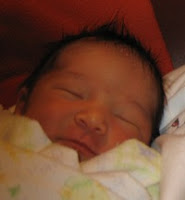
Riley is seven weeks old and smiling, sometimes.

Tuesday, January 29, 2008

Orca a-Live Regions

The Orca and Firefox accessibility folks have being working hard together to bring the dynamic web to users who don't use a visual display. Today Scott Haeger announced that Orca 2.21.90 includes ARIA Live region support!

Congratulations, and thanks for all the hard work!

Saturday, January 26, 2008

Where is David?

Baby Riley smilingI've had enough requests to prompt this somewhat rare personal post. My second child, another healthy girl, Riley, was born January 6th of this month!

I feel so lucky, thrilled, and tired.

I've saved up some holiday time and will continue to focus on my family until the second half of February. High priority community work that I'm involved with will continue to get enough attention that I'm not a bottleneck, but pretty much everything else is on the backburner. Thanks for your patience.

And thanks for reading.

Friday, December 21, 2007

Red Hat and GNOME Accessibility?

Oddly, it is a message from Matthew Szulik as he leaves the role of CEO and President of Red Hat that renews my hope that Red Hat takes accessibility seriously. Why?

In reading that it is important at Red Hat to "seek out those who believe that for any democracy to continue, free and unfettered access to information is an unassailable condition for advancement", I'm struck by the term "unfettered", where I take the term to mean accessible and without barriers.

Please tell me that's what he mean't. Please tell me the new CEO and President, Jim Whitehurst will make that a company directive. I think with that directive in hand, Jonathan Blandford and the desktop team could really make a brilliant impact in GNOME accessibility. With the community looking at an accessibility infrastructure refactor, the timing is right.

Sun Microsystems, having laid the GNOME accessibility foundation, are still chugging away with the classy ORCA screen reader, and helping support GOK maintenance; as well as strategic thinking.

IBM, no longer directly involved in Linux accessibility are still involved peripherally, and are tackling accessibility on many fronts.

Ubuntu has seemed to "get it" from day one. Bravo!

The Mozilla Foundation continues to provide vital seed funding for GNOME accessibility work, bringing in great talent to work on gaps.

Novell seems to understand the importance of this and are putting resources behind it.

I'm sure I'm missing some obvious ones; please leave a comment and let me know.

Exciting times! Thanks for reading.

[Edited to fix name of company! Thanks David Z.]

Monday, December 17, 2007

Invigorating GNOME Accessibility

Teaser: something really cool is coming next year.

A few days ago Behdad gathered some of us GNOME accessibility folks together on IRC to brainstorm which he then summarized and reported back to the board.

Today Brian Cameron posted to the GNOME accessibility list with the subject: "Forming an Accessibility Steering Committee". If you are passionate about accessibility and feel you have the experience and time why don't throw your name in the hat? I imagine one of the things that the committee will help steer is (I'm whispering now...) the cool thing coming next year, but that is only a piece of puzzle.

I don't know what has gotten into Behdad lately but he is definitely helping bring people together around accessibility.

Great job!

Tuesday, November 27, 2007

Transparency in Community Decisions

Transparency should be applied to how decisions can get made in FOSS communities. This can involve different layers; for example, transparency could apply to:

1. Who gets to participate in decision making.
2. How these people are selected.
3. The process of decision making.

In FOSS communities I think transparency should apply to all three where reasonably possible. What do I mean by this? Let's take a couple of examples:

A) Getting hired by a FOSS organization which is integral to the community.
B) Getting commit access to an svn repository.
C) Getting syndication of one's blog onto a planet/aggregator.

A FOSS community might decide on the following transparency for each example:

For A: Transparency of 2 only.
For B: Transparency of 1, 2 and optionally a moderated version of 3.
For C: Transparency of 1, 2, and 3.

How might the transparency by realized?

Let's take example C, the blog syndication; the decision maker(s) should be known, perhaps listed right on the planet. The way the decision makers were chosen should be known, this could exist on a wiki page, perhaps in the governance section of the project wiki site. The decision process could be made transparent by requiring a public trac ticket for every blog that gets added, with the required number of decision makers commenting on the ticket directly, for all to see. As an added bonus, the community could chime in on the ticket with opinions.

Transparency can help avoid conspiracy theories.

Wednesday, November 21, 2007

Mobile Research

I've been meaning to report about my growing involvement in the mobile space.

I'm involved in a mobile device research entity here at the ATRC called SCYP and we just launched our call for proposals. We want to change the world on a shoe string and we need help. Of course I'm steering the project towards free and open technologies... and attending the weekly standups with a swanky new N810 maemo* in hand just might help that along. Oh that, and I'm providing technical oversight for this research entity, which affords me some influence.

Any folks who want to get involved and have a project in mind, or are already doing stuff you think we should know about feel free to comment below or email scyp at atrc dot utoronto dot ca.

*Note: On November 12th I learned I was one of 500 lucky people to be accepted into the N810 maemo device program. Thanks!

Monday, November 19, 2007

Accessible CAPTCHA

Every voice is important, except for spammers.

CAPTCHA stands for "Completely Automated Public Turing test to tell Computers and Humans Apart". Here's one that claims to be accessible:reCAPTCHA.

It will be great to see those communities that understand the future is for everyone start using accessible CAPTCHAs. It is also just good business sense.

Tuesday, October 9, 2007

Mozilla and GNOME Summits

I wasn't able to attend this year's Boston summits for Mozilla Accessibility and GNOME. If you know me, you know this was painful to miss and I'm sorry I was not able to blog about it for others who couldn't make it this year. Fortunately Steve Lee has blogged about it on a sleepy train ride back home.

Wednesday, September 19, 2007

FSOSS 2007

symposium logoThe Sixth Annual Free Software and Open Source Symposium will be held on October 25th and 26th in Toronto Canada again and registration is open. That's only about five weeks away! I really have to send Dave Humphrey my talk title soon... as soon as I decide exactly what I'm going to talk about. Well we know it will be related to accessibility.